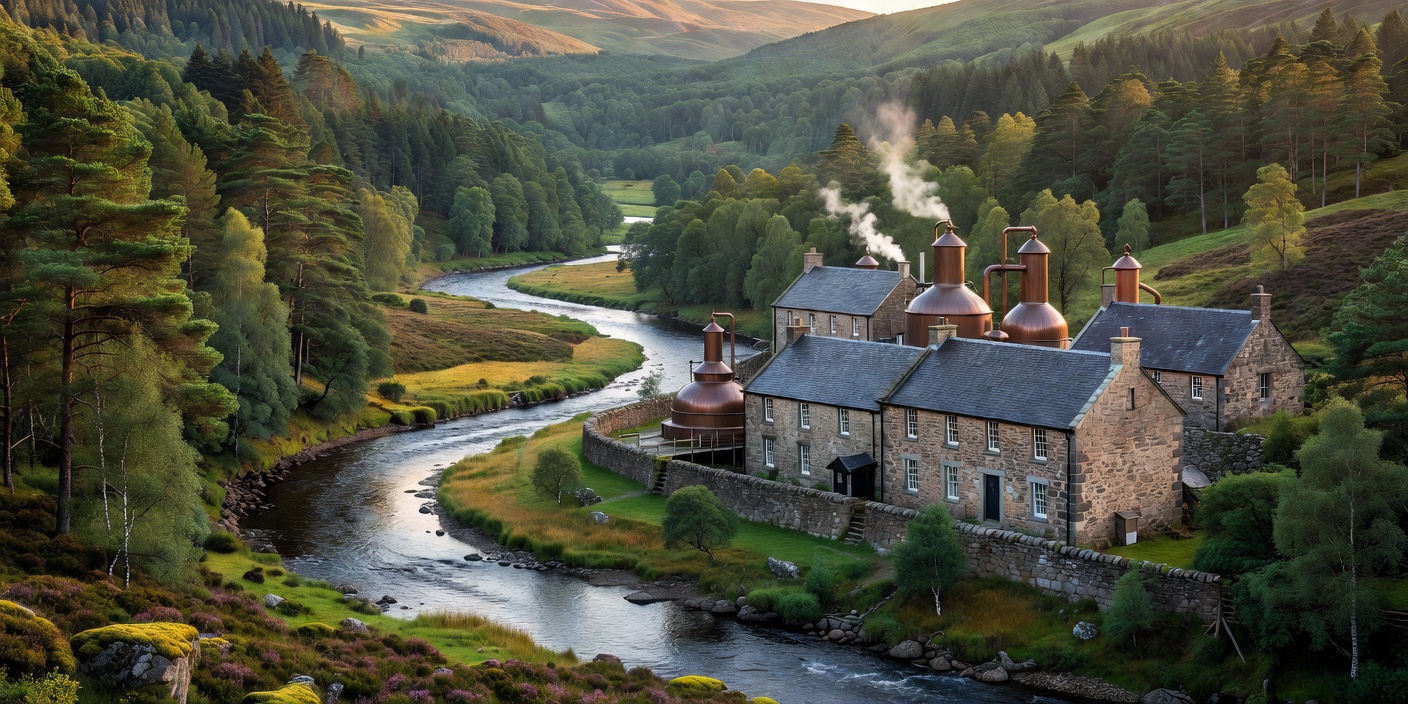
Why distilling gathered here
Speyside’s development rests on several advantages arriving together: water, access to barley, fuel, farming communities and, later, railway connections. The Spey valley and surrounding settlements supported both illicit distilling and its licensed successors. Better transport made bringing in supplies and moving spirit out considerably less heroic.
Dufftown, Rothes and Elgin became important centres, but the protected region is not simply every building beside the river. Its legal boundary matters when interpreting a geographical claim. Speyside is also within the Highlands, and qualifying whisky may use the Highland designation. That is a naming rule, not a cartographic disagreement.
Fruit starts before the barrel
Malting makes barley’s starch accessible to enzymes; mashing converts it into fermentable sugars. Yeast then produces alcohol alongside flavour compounds, including esters associated with fruit. Wort clarity, yeast choice, fermentation conditions and time all affect the starting material for distillation. A fruity spirit is not merely a barrel discovering an orchard.
Many Speyside malts use unpeated malt, but peat is not forbidden. Benromach and peated expressions associated with Benriach are useful counterexamples to the regional shorthand. The relevant question is the malt specification for the particular spirit, rather than whether the distillery’s postcode sounds sufficiently gentle.
The still house refuses uniformity
Still shape, charging, heating rate and reflux influence which compounds travel onwards. Copper contact helps remove certain sulphur compounds, while condenser design affects the opportunity for that contact. Cut points determine which part of the spirit run enters the receiving vessel for maturation.
Compare the heavier spirit traditionally associated with Mortlach, whose distinctive distillation arrangement and worm-tub condensers matter, with the lighter, fruit-led reputation of Glenfiddich. Both belong in a Speyside discussion. Neither proves that a particular still height mechanically guarantees a tasting note; production variables work together, with the inconvenience that implies for simple diagrams.
Cask policy is not regional law
Speyside’s association with sherry-seasoned wood is strong, particularly through names such as The Macallan and Glenfarclas. Yet ex-bourbon casks, refill wood and combinations of cask types are also central to the region’s whisky. “Speyside” does not mean “sherry matured”, however confidently a shelf description joins the dots.
First-fill wood generally contributes more readily than heavily reused wood, though oak species, seasoning, previous contents and storage all matter. A refill cask can leave more room for the distillate; an active sherry-seasoned cask can emphasise dried fruit, spice and tannin. More wood influence is a difference, not automatically an improvement.
Read the small words
“Single malt Scotch whisky” means whisky from malted barley, distilled in batches in pot stills at one distillery. It does not mean one cask. A Speyside single malt can combine numerous casks and ages, with any age statement identifying the youngest component.
Distillation must take place in the stated region, but maturation need not happen beside that distillery. Scotch must mature in Scotland. A cask finish indicates a later maturation stage, not necessarily the character of the whisky’s entire life. Look for explicit wording about full maturation, finishing and cask composition rather than treating them as interchangeable.
Make comparisons that explain something
For an informative reading of two bottlings, compare peat use, cask type, strength and age before attributing every difference to place. An unpeated refill-cask Speyside and a heavily sherried Highland can reveal more about wood policy than geography. That is not a failed comparison; it is the result.
Colour is weak evidence on its own because permitted caramel colouring can affect appearance. “Natural colour” clarifies that question when stated, while “non-chill-filtered” describes a processing choice rather than a quality grade. The region provides a useful first shelf. It should not lock the cabinet.
Legal definitions and geographical indications: Scotch Whisky Regulations. Production background: Scotch Whisky Association discovery resources.