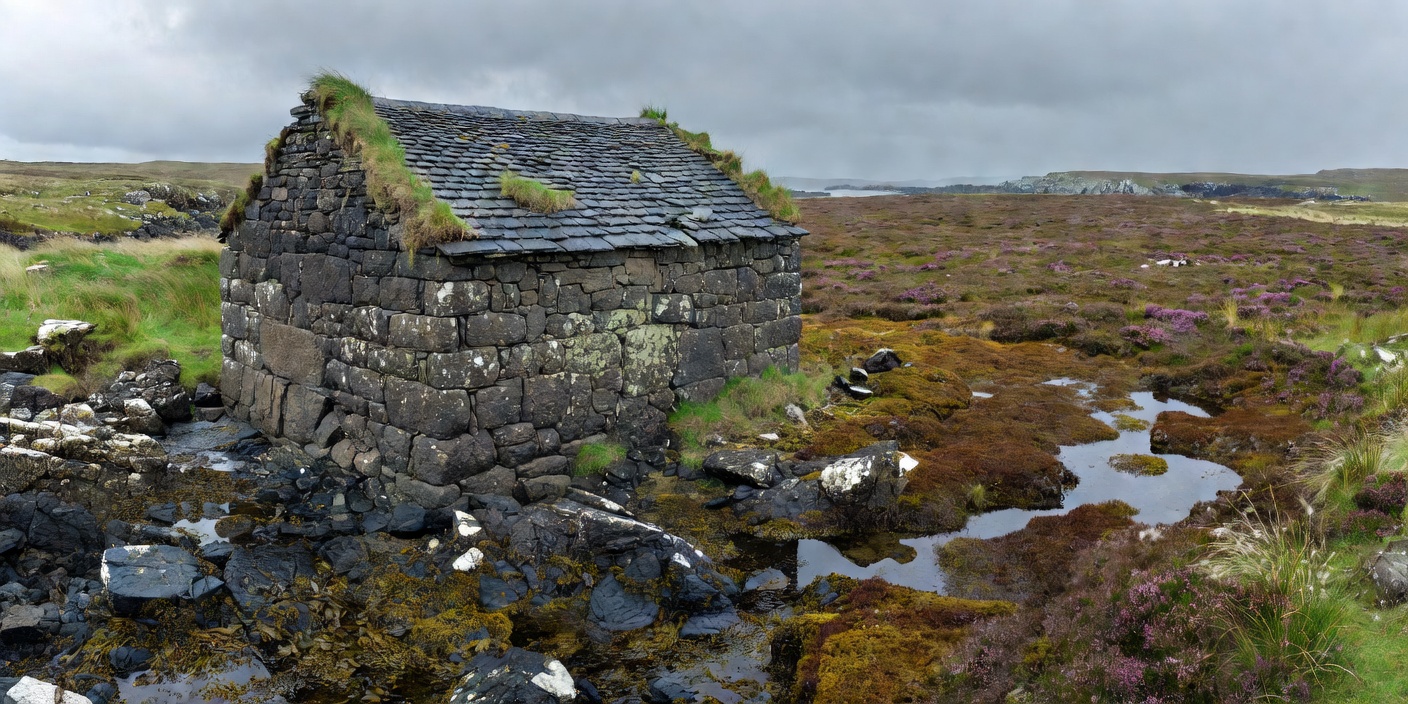
An island shaped by fuel and transport
Peat was an accessible fuel on Islay, and its use in drying malt helped establish smoky styles. Coastal locations also connected distilleries to maritime transport. Barley, casks and finished spirit could move by sea, making a shoreline practical infrastructure long before it became convenient label artwork.
The resulting tradition is substantial but not universal. Laphroaig, Ardbeg and Lagavulin are strongly associated with peated spirit. Bruichladdich’s namesake whisky and Bunnahabhain’s principal style demonstrate the island’s unpeated side. Individual expressions can depart from those associations, so read the bottle rather than assigning smoke by ferry route.
Where the peat character enters
During malting, barley germinates before drying stops that growth. Burning peat during drying exposes the damp malt to smoke, depositing compounds that can survive subsequent production. Peat source, combustion conditions and the way smoke meets the grain influence the result. Phenolic flavours can suggest smoke, medicine or earthy vegetation without indicating added flavouring.
Peaty process water is not the main explanation for heavily smoky whisky. Nor does an Islay designation require barley to be grown, malted or peat-dried on the island. Those are separate provenance claims, meaningful when explicitly documented rather than inferred from the largest word on the label.
A malt measurement is not a taste score
Parts-per-million figures associated with peat often describe phenols measured in malt, not the final bottled whisky. The measurement stage and method matter. Mashing, fermentation, distillation and maturation change the compounds that reach the glass, so a larger malt figure does not translate neatly into proportionally stronger perceived smoke.
Fermentation contributes fruit and other aromas beneath the peat. Still operation and spirit cuts then select from that mixture. Two distilleries using similarly peated malt can produce markedly different spirit. The number may describe an input accurately while remaining an unhelpful ranking of the finished result. Numbers occasionally have this discourteous habit.
The stills make their own argument
Copper contact, reflux and condenser design influence weight and sulphur character. Cut points are especially relevant because flavour compounds do not pass through the still evenly. Ardbeg’s purifier, which returns some vapour components towards the still, is one example of equipment that complicates the idea of peat simply travelling unchanged into a cask.
Compare the relatively restrained, citrus-associated character often described in Caol Ila with the denser medicinal associations of Laphroaig. These are broad descriptive tendencies, not guarantees for every release. Cask treatment and bottling strength can move either whisky well away from a regional sketch.
Maturation does more than quieten smoke
Ex-bourbon wood can contribute vanilla and coconut-like notes; sherry-seasoned wood can bring dried-fruit and spice associations. Refill casks may leave more of the distillate exposed. Wine finishes introduce another variable, sometimes complementing smoke and sometimes dominating it. There is no legally prescribed Islay cask policy.
During maturation, extraction, oxidation and interactions among compounds alter the balance. Smokiness may become less dominant without disappearing predictably at a particular age. Coastal warehouses have distinctive environmental conditions, but a salty tasting impression is not proof that sea salt travelled through oak. An Islay label also does not guarantee island maturation.
Read provenance, then process
Islay is a protected locality for Scotch whisky. Its use identifies the location of distillation, while Scotch’s wider rules govern ingredients, maturation and bottling strength. “Single malt” still means one distillery, not one production batch, one farm or one barrel.
When interpreting an expression, establish whether it is peated, what the cask wording actually states and whether an age statement appears. Compare similar cask types before drawing conclusions about distillery character. “Cask strength” does not promise a standard alcoholic strength, and a darker colour does not prove more smoke. The island supplies enough interest without recruiting colour as a peat detector.
Protected locality and category requirements: Scotch Whisky Regulations. General production information: Scotch Whisky Association discovery resources.