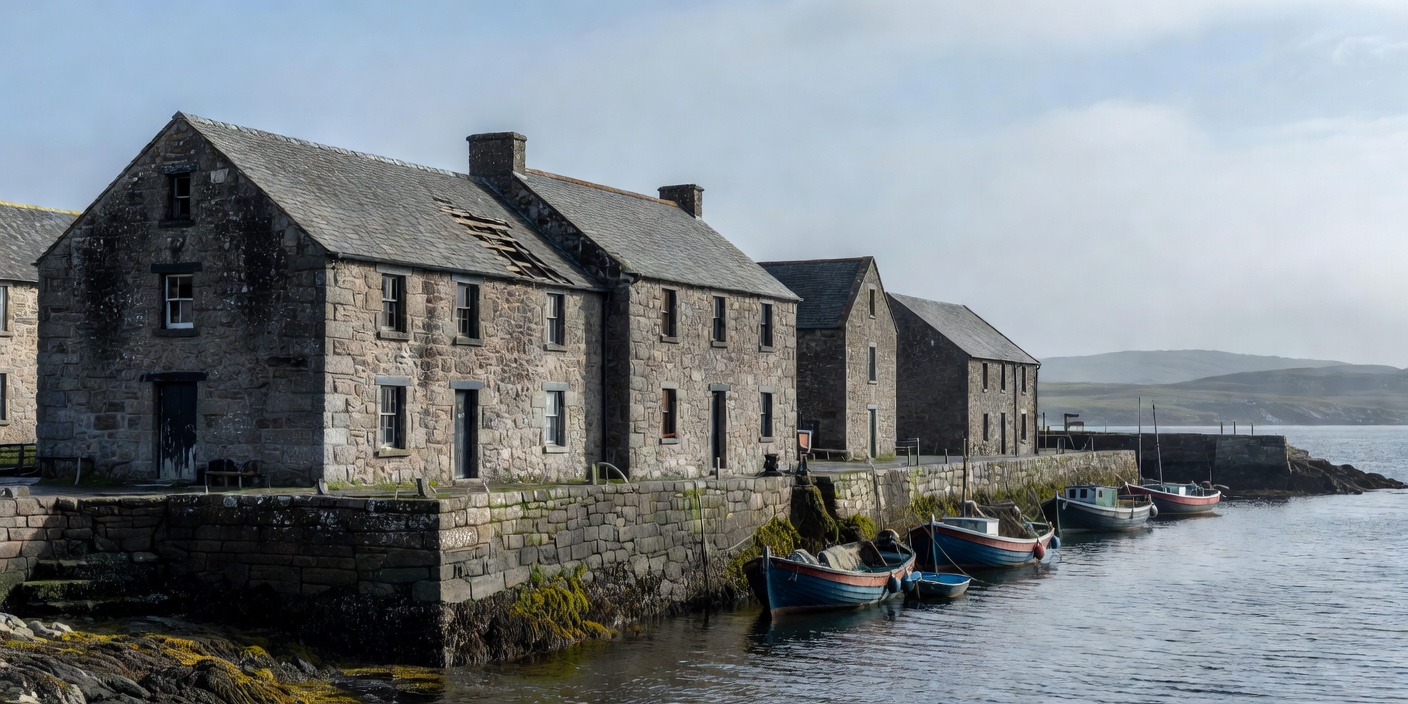
A port before a flavour category
Campbeltown sits on the Kintyre peninsula, where a sheltered harbour helped connect distilling to wider markets. Local farming, water supplies and access to coal supported the industry. Shipping made this apparently peripheral location commercially useful: geography looks rather different when freight travels by sea.
The town experienced a major distilling expansion followed by severe contraction. Changing demand, economic pressures and competition all belong in that history. Reducing the decline to one colourful tale about poor whisky is too neat. Campbeltown’s protected locality preserves a geographical identity; it does not certify that all producers shared a recipe in either prosperity or difficulty.
Distillery names and whisky names differ
Springbank, Glen Scotia and Glengyle provide distinct reference points for understanding the town’s production traditions. Glengyle’s single malt is known as Kilkerran, so the name on the bottle need not match the name above the distillery door. That is worth establishing before treating them as separate places.
Springbank also makes spirit styles sold as Springbank, Longrow and Hazelburn. These names describe materially different approaches within one distillery. A regional comparison that ignores those internal differences can mistake a production decision for a town-wide characteristic. Campbeltown may be geographically compact, but its labels still require reading.
One site, several distillation routes
Springbank’s namesake spirit is associated with a partial triple-distillation arrangement, commonly described as two-and-a-half times distilled. This is shorthand for the routing of different portions through the system, not a still that stops halfway through being a still. Longrow uses double distillation and heavily peated malt; Hazelburn uses triple distillation and unpeated malt.
These contrasts change more than the amount of smoke. Distillation routing, copper contact, reflux and spirit cuts influence the balance of flavour compounds. Glen Scotia’s own pot-still production provides a further comparison, while Kilkerran has its own distillery character. The locality gives them a shared address in the discussion, not identical contents.
Texture is not one mysterious ingredient
Oily, waxy, mineral and savoury are tasting descriptors rather than legally defined constituents. Fermentation can develop a broad range of compounds; distillation selects among them; maturation alters their balance. The frequently used word “funk” is particularly imprecise. It needs unpacking into actual aromas and textures before it explains much.
Traditional floor malting at Springbank is a meaningful production feature, but it cannot alone account for every flavour attributed to the whisky. Peat exposure, fermentation conditions and still operation remain relevant. Nor does a coastal location establish that a saline impression came from seawater. The harbour has already done useful historical work without becoming an ingredient.
Cask policy creates further distance
Ex-bourbon and sherry-seasoned casks both feature in Campbeltown whisky, alongside other maturation treatments. Refill wood can leave spirit character relatively exposed. More active wood can add sweetness-associated aromas, spice and drying tannin. A heavily influenced cask may make two expressions from the same distillery seem less alike than their names suggest.
A finish should be distinguished from full-term maturation in the stated cask type. Look for details of the earlier maturation where supplied. An age statement identifies the youngest component, while a single-cask statement concerns the bottling’s cask source. Neither tells you automatically how peated, oily or coastal the whisky will seem.
Separate identity from expectation
Campbeltown on a Scotch label identifies a protected place of distillation. It does not mandate local barley, a particular malting method or maturation entirely within the town. Specific provenance statements may establish those details, but the geographical name cannot carry them all by implication.
To interpret differences, first establish the distillery and spirit style, then peat use, cask history, age and strength. Springbank and Hazelburn offer a useful conceptual contrast because one site produces different styles; Glen Scotia and Kilkerran show why the wider locality should not be reduced to one producer. “Campbeltown character” is a starting observation. The interesting part is asking which character, and why.
Protected locality, age statements and category requirements: Scotch Whisky Regulations. General process background: Scotch Whisky Association discovery resources.